Showing posts with label activities. Show all posts

Friday, March 18, 2016

Pi, Pie, and Politics

Music Class

We've had a busy week! Here's a sampling of what's been going on lately. 

On Monday, our class led the weekly, school-wide assembly. We opted to talk about our work in the Place Out of Time project. After a quick explanation of what Place Out of Time (POOT) actually is, we demonstrated the "POOT Switch." This is the switch found in our classroom that I periodically flip for classroom conversations that are conducted entirely as our POOT characters. It's a fun (and slightly terrifying) aspect of the POOT experience. When the POOT switch is flipped to "ON," kids know that I will only address them as their characters. If they attempt to respond in any way as "themselves," they know that I will treat them as if they are still their character, but having some sort of episode. POOT works best if everyone is buying into the concept, and this is invaluable (and fun!) practice. 
We've prepared for this activity in two ways. First, we've learned some of the basic rules of improvisational theater. There are many schools of thought in improv, but there are some fairly universal tenets that are actually pretty useful tools for everyday life. The most ubiquitous of those rules is "Yes, and..." 

The basic idea is that when you are improvising, you must accept whatever is given to you, and then build on it. If I address you as if you are former President Richard Nixon, you not only have to accept it, but add to the conversation. You can never "negate" something that's been offered, or the whole thing falls apart.

The second concept that we've used for this activity is "No Permanent Damage." We're all filled with all sorts of fears, both rational and the opposite. How can you distinguish a fear that is keeping you safe, from a fear that is keeping you from experiencing something positive? 

Here is a simple test that you can conduct any time you're deciding whether or not to engage in an activity that is causing you apprehension: If you're feeling nervous or unsure about something, ask yourself, "By doing this, am I exposing myself to a risk that could potentially cause me true and permanent damage? Might I lose a toe, go blind, or earn an unsightly scar?" 

If the answer is no, go ahead and try it! For example, the worst case scenario of improvising as a historical figure in front of your classmates is that you might be a little embarrassed if you say something truly ridiculous. Embarrassment isn't permanent damage, so you can feel safe giving it a whirl. 

Everyone involved did a great job of rolling with the questions that I asked them, and part of the fun of the exercise is wriggling your way out of answering a question that you are unsure about. For example, I asked Kaz (portraying futbol legend Pelé) how his children felt about his fame. Kaz had no idea what the real Pelé felt about this, so he responded with, "I don't talk about my children publicly." Brilliant! 

Monday was also 3/14: Pi Day!


We combined our math group with Sam's to discuss the concept of Pi in a number of ways. The most important thing that came from the day was talking about how mathematics is much, much more than arithmetic. 

A significant part of elementary and middle school math revolves around learning arithmetic: Addition, subtraction, multiplication, and division. It gets dressed up a bit the further along you get (fractions, decimals, ratios, percentages, etc), but it's ultimately all still the same thing: addition, subtraction, multiplication, and division. They are crucial tools to learn, but they're still just tools. Math is much more than that. 


Sam returns! He shared photos of his new daughter Maddy, as well as pie! 


This election season... Oof. As you might imagine, the kids have it on their minds. We used it this week to demonstrate some applied mathematics that goes beyond simple arithmetic. 


The branches of government. We've gone over this a few times over the last few weeks as we've tried to understand exactly what the President of the United States can and cannot do. 


We talked about how the United States has a representative democracy, not a direct democracy. A direct democracy would find us voting on each and every single proposed law at the local, state, and federal level. Few of us have the time for this, so we elect representatives to vote in our best interests instead. It's a useful system, but there are issues with it. One of them is that p
eople have been using math to game the system for generations: Gerrymandering. 

We talked about gerrymandering as a concept, and looked at some examples of it in action. First up is a very clear model of how it works: 


Here's the political cartoon that first articulated the practice: 


Here are some notoriously gerrymandered congressional districts in the United States: 


Finally, we tried our hands at manipulating elections. Here's one of the exercises we did together: 

In this particular scenario, the Democrats outnumber the Republicans. However, it is possible to draw four districts (with six "cities" each) that allows the Republicans to win the election. (It must be noted that all political parties have been guilty of engaging in this practice.) 


Math and civics! It turns out that they have a lot to do with one another! 


Friday, February 26, 2016

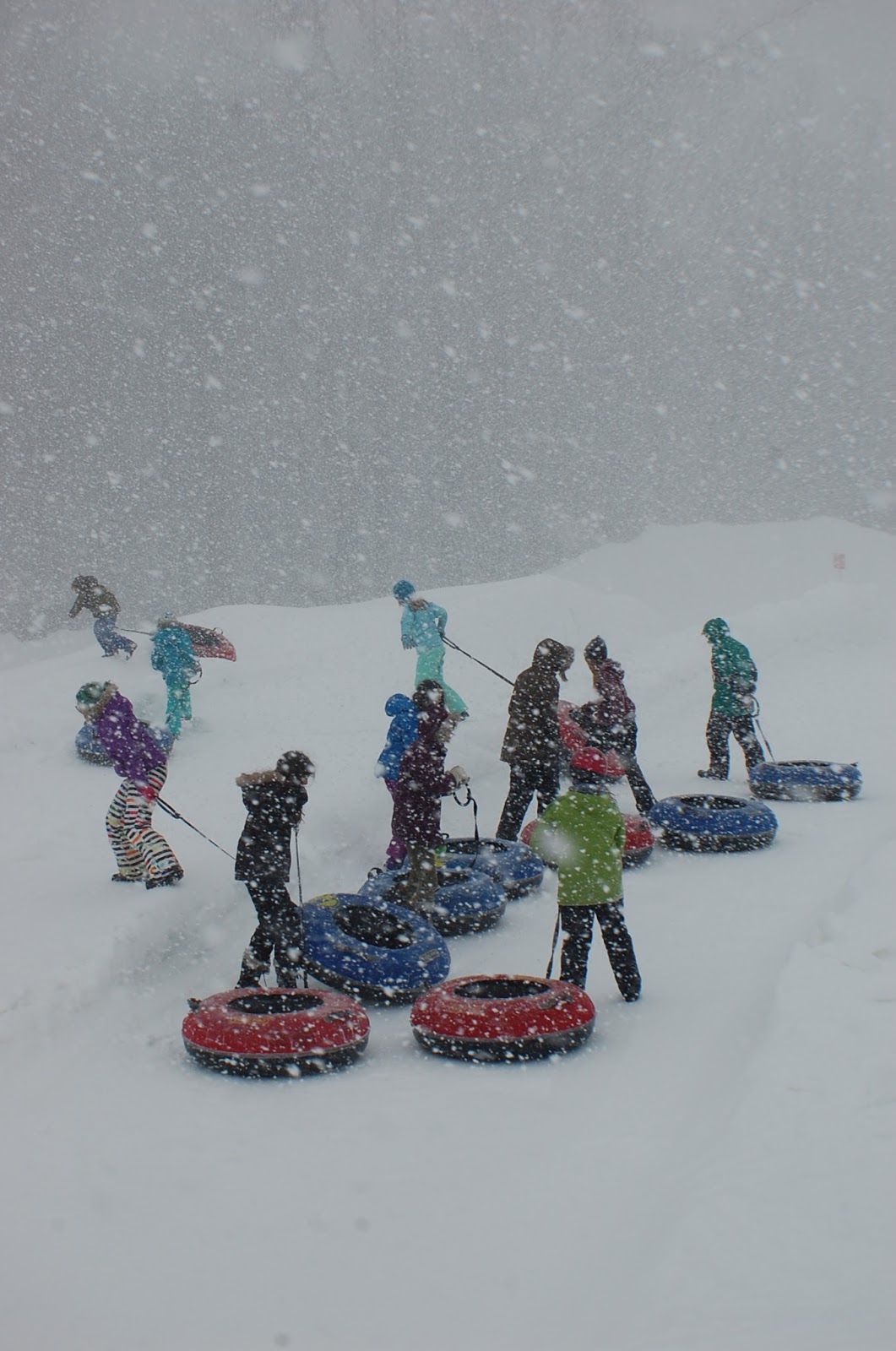
Hawk Island Snow Tubing!

It has long been a Summers-Knoll tradition that the entire school goes ice skating together on the Friday before mid-winter break. Our tiny school, however, has grown into a small school, and we're now large enough that having all of us on an ice rink at once is a bit unwieldy. Last year, the middle schoolers inaugurated a new tradition: While the lower schoolers went ice skating, we traveled to Lansing to Hawk Island Park to go snow tubing

Here's a sampling of the photos (and a couple of videos at the end) that I was able to snap before a blizzard moved in and jeopardized the survival of my camera. 

(I'd attempt to label everyone, but it's difficult to make out who everyone is in bulky snowsuits.)


Friday, January 8, 2016

Math: assorted recent topics


As discussed in a previous post, the Singapore Math books serve as a backbone of our math curriculum. It is largely an individually-paced program (though small cohorts often form and work together), allowing students to progress at a rate that makes sense for each topic. We have Math class four times a week, and we generally devote one or two sessions to Singapore work, which allows for questions, small group break-out sessions, and targeted group lessons. 

With the rest of our class time, we do a variety of activities that benefit the entire group, regardless of where they happen to be in their particular math books. In this post, I wanted to share a few of the things we've done in recent weeks apart from Singapore work. 


We regularly work on problem solving as a class. First we'll go through a problem together, and then we'll break off to solve similar problems in small groups or individually. The problems themselves are sometimes slightly ridiculous ones pulled from various places (you may recall this blog post from October), including some of my own design. For example: 


For this one, kids worked in groups of two to three, picked a spot and attempted to calculate the volume of the space. After some measurements and calculations, the kids had an approximate volume of the space. They then turned to the internet to try and find inexpensive sources of plastic balls. It turns out there are a lot of options: 


You can get anything on the internet. 

One enterprising young student even found an online ball pit calculator, complete with tips on how to construct your pit. 

Taking measurements to convert the middle school airlock into a ball pit (which is almost certainly a fire code violation).


Now I just need to organize a fundraiser to raise capital for the venture... 

Sometimes, someone will ask a question that lends itself to an impromptu mini-lesson. 
For example, someone had a question about how to break down a problem from their Singapore book. As a class, we spent a period really breaking down a word problem. 

First, I wrote it up on the board as written in the book.


Then, we talked through it. Determining what the question is asking can sometimes be deceptively complicated, so parsing out what is being asked is crucial. Also, there are some vocabulary words that are used infrequently in everyday life, but are important to basic math. Here's what the board looked like after we finished: 


It looks particularly complicated because we explored a few of different ways to approach the problem. 

We often devote a day to playing math-related games. Sometimes they're classic games like Uno, Blokus, or Othello, and other times, they're Summers-Knoll classics, such as Factor Tag

A new favorite that we've played is "The Card-Forehead Game." We obviously need to work on a flashier title, but the game itself is really fun. 


You play in groups of three. Two players face each other, then each take a playing card and hold it up to their own forehead (so they can't see it, but their opponent can). The third person then generates a simple math problem on the spot based on the cards that each player holds up. 

For example, if Nick holds up a 10, and Ella holds up a 7, the third person could say, "Nick minus Ella equals 3." 

Both players have to quickly think about what their card must be if that is true. The third player also gets practice by generating the problem in the first place, and making sure they know the correct answer. 

Here's a quick video of the game in action:  


It's a fun, easy way to get practice in the four operations, firming up math facts along the way. 

This post has grown beyond my expectations, so I'll cap this entry here. Look for a follow-up installment in upcoming weeks!

Wednesday, September 30, 2015

Science: Building the digestive system


As part of our Identity theme, we're learning about the different human body systems during our Science classes with Lisa. Check out her recent blog entry to see how we're learning about the digestive system!


Measuring and recording the lengths of our innards


If we could stretch our digestive systems out, they'd be about this long (and much bigger and messier).
In addition to the yarn models, we created models of our stomachs using plastic bags, complete with juices to replicate the conditions inside of them. We inserted torn up ("chewed") bread and corn, then spent some time mashing the food up to observe the results. It was both interesting and gross! 


Tuesday, September 15, 2015

Science: "Enigma Cylinders" (and banana phones)


As you may know, Lisa Johnson (famous and beloved for bringing Fish Lab to Summers-Knoll) has joined our faculty as a science teacher. We'll be co-teaching science this year, and we ran a fantastic activity on class on Monday. I'll tell you all about it, just as soon as Bora finishes this phone call. 


Bora blatantly violating our "no phones during the school day" rule


We wanted the kids to get the kids "doing science" early and often this year, but many people have differing ideas about what that actually means. To get us all thinking about what science really is, we introduced the class to some mysterious objects that we call "Enigma Cylinders." 


As an educator, this activity was incredibly easy to run: We simply passed out a few of the cylinders to the kids. Before we had a chance to bore them with directions, they all instantly snapped into the mindset of scientists. They furrowed their brows, tugged at strings, and started talking. 


First they made observations, then they started offering possible explanations for what they were seeing. Before long, they were sketching. By the time Lisa and I actually told them that they'd be attempting to make their own models of this contraption, most of them were already well on their way to sketching potential designs. All of this was pure inquiry. It required so little direction from us that I was able to film them in action. Check out the following video, which picks up immediately after handing kids the cylinders. None of what you hear them saying is in response to questions that we've posed to them. If you've ever wanted to be a fly on the wall during a Summers-Knoll class, this is the video for you:


As mentioned in the video, all three groups eventually constructed models that seemed to be reasonable facsimiles of the cylinders that they examined. However, Lisa and I have vowed to never reveal the inner workings of our actual cylinders, as that's part of true science! There are many things in this universe that we will never truly know. 


Lisa gave a great example: We will never know for certain what caused the extinction of the dinosaurs. Never! We do, however, have a very good hypothesis or two about what happened to them. And as we collectively learn more about the world, we can revise our hypothesis (or throw it out entirely if compelling evidence demands it). In many ways, science demands failure and revision. We will encourage both over the course of this school year (and beyond)!


But enough about Science. Let's check in with Bora. How's that phone call going, Bora? 


See? This is why we make kids keep them in their backpacks. 

Wednesday, April 15, 2015

A treasure trove of photos


Gathered around a new pal at Mary Beth Doyle.

We took a stroll down memory lane with the last fifteen minutes of the day yesterday, looking at a bunch of photos from the school year (so far). There's no rhyme or reason to these, and at least a few have probably already been posted, but we thought you might enjoy seeing them all regardless. Enjoy!


Kalamazoo Air Zoo

Addressing the school about Festifools and Fool-Moon

Joanna talks about A Wizard of Earthsea 

North Campus field trip 

Cup stacking in PE

Gabe's adventurous hairstyles 

Grandfriends Day

Planning and building filters

Filter construction

Factor tag


University of Michigan Museum of Natural History

Magic Show!

Portrait by a student who would prefer to remain nameless

Maddy working with a familiar volunteer

Maddy performs, Emma assists


Class value poster by Eva

Book group presentation

David and Gabe present 

Kids working through a math problem in a variety of different ways

Examining slides

Iron, salt, and sand separation project


Sage advice from Oliver S. 

Celebrity visitors


More group presentations


Capes are very "in" this year. 


Thanking Jenny Hannibal for bringing a mountain of books to our school. 

Attempting to construct a device that will capture oxygen from a photosynthesizing plant. It was trickier than we anticipated. 

Living the art in Toledo. 

Toledo Museum of Art 

Field trip to the Festifools workshop

Gabe and Ariana recording data 

Middle school snow tubing trip 


Festifools workshop


Owen pointing out a dubious claim during a North Campus field trip

Niko and Owen (and Oliver S just out of frame) performing 'Space Oddity' at the Music Cafe 

Nick addressing the faculty at a staff meeting. Mrs. Carpenter's look of disgust or disdain shows that he's really making an impression. 

North Campus field trip, this time to meet with a design team. 

North Campus field trip to see glass blowing at the Chemical Engineering building. 

Middle School trip to the Festifools workshop 

Gabe and Oli trying to work a balance. Owen mugs. 

Character Day. (Gabe is a guy from the show Psych, Luke is the Cat in the Hat.)

Character Day 

Gaga game at Howell Nature Center

Quiet reading time

Marcellin and Gabe in a friendly game

Making watershed models and simulating rainfall and runoff 

Making and measuring craters

Oli prepares for the high ropes course at Howell Nature Center 


Keira

Evan

Jenny and Eva


Class values


Emma and an owl talon 


Working hard

Violet visits Emma and Eva in aftercare

Sunny day at Mary Beth Doyle

Magic show rehearsal


Air Zoo


Nick magically pulls something from Niko's ear


Taking a water sample in Mallett's Creek

Danger at the UM Museum of Natural History

Dino leg (fifth graders added for scale)

Stream table workshop at UofM

Middle School soccer game with Friends School