Showing posts with label social justice. Show all posts

Friday, March 17, 2017

Week 25 -- Pi, pi, shoplifting, and justice

Recording our gravity car trials in science 

The Place Out of Time trial has begun in earnest, and we spent part of this week unpacking the opening arguments of the plaintiff and the defense. As mentioned previously, our case involves the true story of the Italian Supreme Court of Cassation overturning the conviction of a homeless man who shoplifted approximately $4.70 worth of food because he was in “a state of need.” It’s a very interesting story, and it’s well worth reading a little about it. It captures a lot of what’s in the political climate of our country at the moment, while being far enough removed to allow some perspective.

Our trial in the Place Out of Time courtroom is a fictional extension of the story. The plaintiff in our case is the shopkeeper whose merchandise was stolen in the first place. She asserts that human need and dignity are obviously important matters for a society to address, but the fact remains that it was her store and property that were affected. A law was broken, and she was directly impacted. Doesn’t this ruling send a message that anyone can come in and take her property? She makes a compelling argument, and the defense has the job of convincing us that the court’s ruling should stand. Everyone is wrestling with this issue, both in-character and as themselves.


Winter came back for a bit this week:


Henry pits readers against each other. 
Meanwhile, a conversation that began during our weekly library time with Rachel led to this week’s journal prompt: “Novels versus Graphic Novels!” Students were encouraged to explore the pros and cons of each as a storytelling medium, and to write about how they interact with each. It was a unique prompt, in that kids were given the option of responding in prose, text, or some hybrid of both. Some kids who enthusiastically leapt to respond in a comic format realized that it can take a lot longer to write and draw a story than they realized. Many of the responses were playful and clever. Ask your child how they responded!
Joey had the books themselves fight it out. 

In math group, we spent some time working in our Singapore books, but as with every March 14, pi was front and center. On Tuesday, 3/14 (Pi Day), we watched some videos about pi, including one of Vi Hart’s infamous anti-pi rants.

One of the points of her video led us down a bit of a rabbit hole, as we started talking about scales of magnitude and the spaces in between things. This was vividly illustrated by playing with the very illuminating internet tool/toy The Scale of the Universe. Please do yourself a favor and spend several minutes playing with it right now. We also watched the classic Eames film Powers of Ten.


Of course, we are essentially obligated to bring in some sort of actual pie as part of all of this, a task that Sam dutifully took on as our school’s foremost expert on pi, pie, and homophones.


Friday, March 10, 2017

Week 24 -- Greetings from Livonia

Middle school trip to Livonia 


If you encounter one of these brave fifth or sixth graders, be sure to ask them about the food-related science experiment that they participated in at the hands of seventh graders Nick and Owen. (This is their reactions to eating haggis, but before being told what haggis actually is.)

We began the week on Monday digging further into Place Out of Time. We had an interesting in-character conversation (ask your child about "the POOT switch") about their thoughts and experiences breaking social and/or legal boundaries. The issue we're examining with Place Out of Time is if it should be socially and/or legally acceptable to steal something in order to survive. Most of our characters seemed to be in favor of breaching social boundaries on occasion. Transgender activist Jazz Jennings, for example, had thoughts about the social norms that she has felt compelled to break, based on her gender identity. Al Capone felt great about violating legal boundaries, as doing so made him quite wealthy.


Out of character, we had a discussion about the the differences between the ideas of nationalism versus global citizenship, which are two concepts that have been discussed a lot in the world lately. We specifically talked about the nature of the relationship between the United States and Mexico, as well as the role that China (and other parts of Asia) plays in manufacturing things inexpensively for the world. Our journal prompt this week also related to the discussion. Kids were asked to respond to the following quote:

"Poverty is like punishment for a crime you didn't commit." — Eli Khamarov


Responses varied, as you can imagine. These are thorny issues that don't have easy answers. Exploring them together gives us much to think about as we increase our awareness of the nuances of a complex world.


Though this sounds like this may have been a pretty heavy week, our work and conversations have been spirited and engaged.

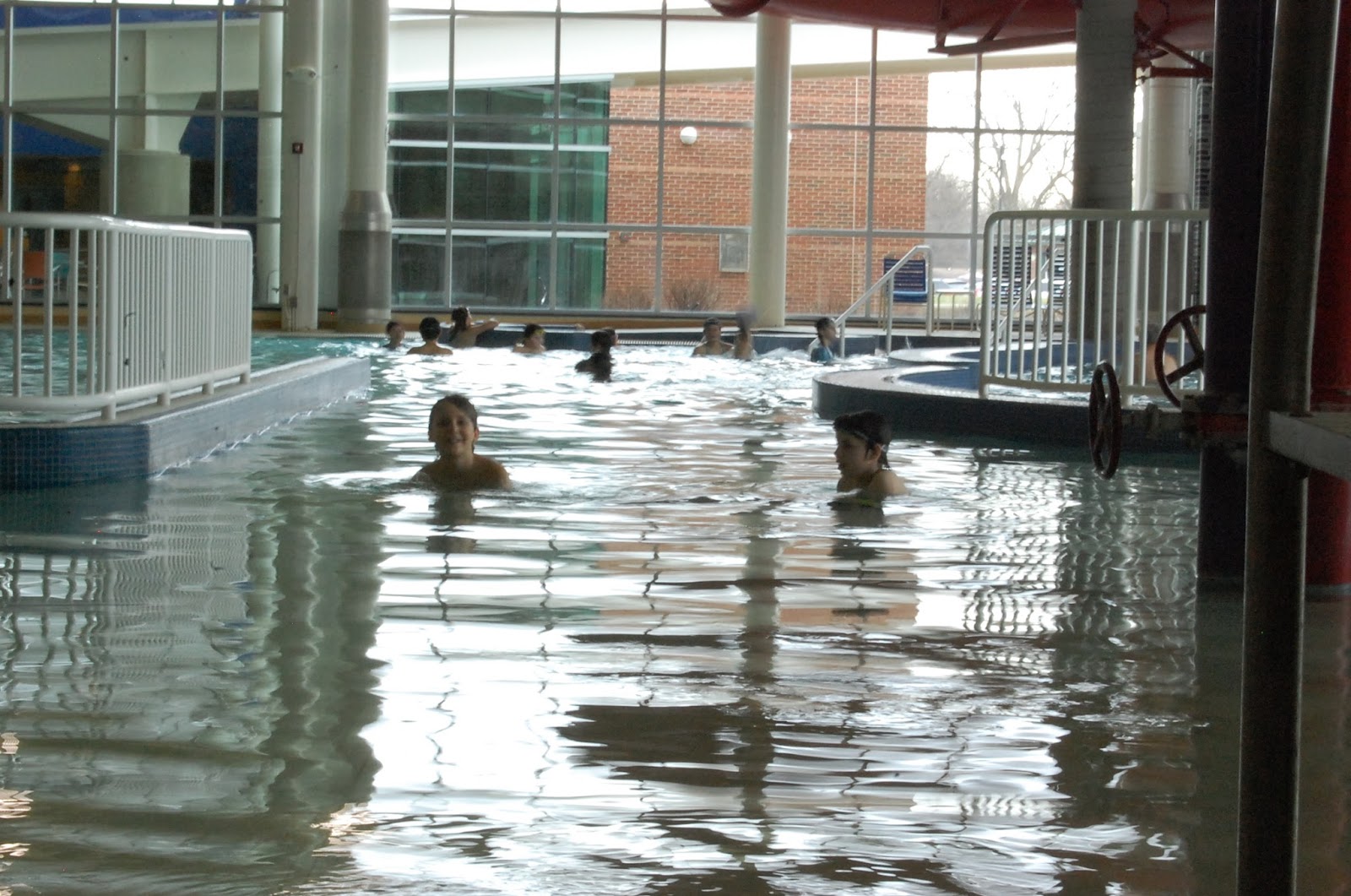
Spirited and engaged were taken to a new level on Thursday, when the entire middle school traveled to Livonia for a day of socializing and activity at the Recreation Center there. It was a make-up trip for our canceled snow tubing trip (thanks for nothing, global climate change!) and the kids had a great time swimming together, playing basketball and other games, and more. It was a great bonding day, and an excellent way to celebrate a three day weekend.


Friday, February 17, 2017

Week 22 - Archigram and ice capades


This week, we began digging into the issue that will drive many of our Place Out of Time conversations over the course of the semester. It concerns an Italian court decision that overturned the conviction of a homeless man who had shoplifted a small amount of food. The court declared that his act couldn’t be considered a crime because he was in a state of need. To unpack the issue a bit, we went through an extremely simplified example of how societies function. (Ask your child about the desert island example.)


On Wednesday, we took a field trip to see the Archigram exhibit in downtown Ann Arbor. It was recommended to us by Amy Kulper, who met us at the exhibit, sent us on a scavenger hunt, and guided us around some of the work. Take a more detailed look at some of the work we saw here. The exhibit ends this weekend, but we’ll be processing some of what we learned in the weeks after the break.


We also spent some time writing this week. Everyone has posted their Place Out of Time resumes on the site, and have moved on to responding to some prompts. One asks each character to talk about a turning point in their lives. Another asks what they brought with them to this strange (and imaginary) gathering. We also responded to a journal prompt, considering this quote from Albert Einstein: “It’s not that I’m smart, it’s just that I stay with problems longer.”

In math group, we wrapped up with Flatland, celebrated some math milestones with a game day, and spent some time working on our Singapore progress. Students are more than welcome to take their books home over the break to make further progress, if your/their plans allow it. Have a wonderful break!


Friday, May 13, 2016

Monarchs & monarchs


The last several weeks have been informed by learning about two types of monarch, both of which have been cast aside by Americans. One was intentional (King George III, during the American Revolution), the other has been an unintended consequence of the rise of industrialized farming in the United States (the migrating monarch butterfly). 
You may recall some of our work earlier in the year inspired by Last Chance to See, a powerful and entertaining book by Douglas Adams. In it, Adams and naturalist Mark Carwardine travel the world in search of some of the most endangered animals on the planet. 

It is a sad truth that there are endangered species in every region of the world, including our own. Rather than view this as an immutable fact beyond our control, our class has opted to actively work to reverse the fortunes of a familiar, but threatened species: the migratory monarch butterfly. 


The monarch is striking and iconic. If asked to picture a butterfly, most people will likely conjure a monarch in their mind. It is a widespread species, but the insects that we see in Michigan are part of a remarkable annual migration that becomes more miraculous and mysterious the more you learn about it. 

There is (of course) a Wikipedia article about this migration, but in brief: Monarch butterflies take part in a migration that begins in the mountains of Mexico, passes through the continental United States, and concludes in Canada, where they reverse course and head back South. The remarkable thing about this is that the annual migration takes five generations of monarchs to complete. The butterflies that start out in Mexico are not the ones that arrive in our state months later, but their grandchildren. How these butterflies know to consistently follow these paths of their ancestors is a mystery to science.  


It's also a phenomenon that is in danger of disappearing. 


Monarchs are wholly dependent on milkweed, on which they lay their eggs during this long journey. Familiar caterpillars soon hatch, feast on the leaves, create a chrysalis, and emerge in their adult stage two weeks later. 

Milkweed, formerly quite plentiful, is being wiped out en masse as an unintended side effect of the proliferation of industrial farming. Pesticides meant to protect crops have eradicated milkweed populations, significantly fragmenting and reducing a vital resource for the monarchs. 


Happily, there are simple things that people can do to help. 


The most passive is to learn what milkweed looks like, and take care not to remove or poison it if you happen to have it on your property. Milkweed has a bit of a public relations problem. It has the word "weed" right in its name, and it tends to grow in unpredictable places from year to year, confounding gardeners of a more controlling nature. One of the many things we hope to do is to work to rehabilitate the reputation of this important plant. 

A screenshot of recently spotted monarchs.
Visit this link for an interactive version. 

Our class has opted to take a more proactive approach. We have spent the last several weeks researching and planning a monarch waystation, which we're developing on the campus of Summers-Knoll. It is taking shape just outside of the windows of the 5/6 classrooms. As of today, there are two raised beds (constructed by Chris Swinko and his 3/4 class) that will eventually be stocked with native flowering plants that will bloom throughout the spring and summer, and milkweed that has been cultivated from local sources. 


It has been quite a project. This is an interdisciplinary affair, born in Science class, but taking significant portions of our homeroom time. Science Teacher Lisa has a certified monarch waystation at her home, and she has served as an inspiration, mentor, and guide in this endeavor. 

Our grand plan goes beyond simply creating a waystation at school. We also hope to cultivate and distribute milkweed to all who are willing to grow it at their homes. This means that we've been trying to grow our own milkweed from seed. Teams of students have been attempting to cultivate seeds in our classroom and in the greenhouse, experimenting in order to determine the most effective ways to grow milkweed from seed. 


We've also been tracking existing monarchs. Studying monarchs is an excellent way to engage as citizen scientists, with enthusiastic hobbyists and naturalists collecting and sharing data about milkweed and monarch sightings. Kids can be found checking this site daily. (Ask your child about it!) 

The project has offered many authentic opportunities for genuine science. For example, rather than simply buying topsoil from a retailer, we are trying to "mine" our own campus for material. One day found all of our students working in teams to collect soil samples from various places on the Summers-Knoll grounds to determine the best site to take soil. 

When it was determined that the most fertile soil seemed to be in our woods just beyond the playground, we decided that we needed to do a mini-environmental impact study. What would it mean for us to move into a previously undisturbed area to remove several dozen cubic feet of soil? To find out, we trekked carefully into the woods to see what was living back there. 


What we found surprised us all. 


We are currently attempting to identify the source of a clutch of eggs found beneath a log near our vernal pool. Our initial suspicion is that our small woods may be home to a population of reclusive salamanders. We are trying to verify this through online research and reaching out to herpetologists. Stay tuned for updates! 


I also mentioned that other monarch earlier in this post. As part of our background preparation for our upcoming Spring trip to Philadelphia, we have been studying colonial America and the American Revolution. We've been using a number of sources in order to get a well-rounded look at this period of history. We have read selections from Joy Hakim's A History of US series, watched selections from the HBO series John Adams, and listened to selections from the recent Broadway phenomenon Hamilton. We've also done a close reading and discussion of the United States Declaration of Independence, and we've been barreling through our current read aloud book, Chains by Laurie Halse Anderson


Taking stock of the greenhouse inventory


Researching milkweed, native plants, and monarchs


Attempting to grow milkweed from seed, attempt #1


Moving the raised beds to their new homes


Searching for ideal sources of soil


Soil samples settling for close observation and study


Friday, April 8, 2016

Guest Speaker: Sam French, writer and director of Buzkashi Boys


On Wednesday, March 30, we welcomed Academy Award nominated director Sam French to our school. Sam was in Ann Arbor speaking at the University of Michigan, and we were lucky enough to have him address the Summers-Knoll middle schoolers for an engaging question and answer session about his work. 


In preparation, we watched Sam's short film, Buzkashi Boys. It's a notable film for many reasons. The most overt is probably the fact that it was nominated for Best Live Action Short Film in the 2012 Academy Awards. Perhaps more importantly, it was filmed entirely on location in Kabul, Afghanistan using local actors and a largely local film crew. The story also followed up on our study of the Time for School project. Shugufu, one of the subjects of that documentary, is also a young person trying to make her way in Afghanistan. 


Sam French was a thoughtful and gracious guest. He shared anecdotes and answered questions for well over an hour, discussing a myriad of topics. We learned about how difficult it is to find actors to cast in a country where the arts had been brutally suppressed for decades, the perils of trying to work with horses, how a simple change in weather can force changes in a filming schedule, and some background on some of the stunning locations featured in the story. He also shared some thoughts on storytelling and filmmaking in general. 


Here is a trailer for the film, and below that, the full film itself: