Friday, June 3, 2016

The Spring Trip: Philadelphia!

Did you hear the news? We went on quite a field trip recently. Indulge us by take a look through our vacation photos in this post! 
Our first museum stop was one that we just happened upon: The Ohio Turnpike Museum, located in one of the travel centers. Presumably, this was a creative way to use the space when a Sbarro or a Panera lost their lease. It was my fondest hope that this would be the least interesting museum on our trip, and I believe it was. 
Wild Chicken?
Ah, the Spring Trip! It's a Summers-Knoll tradition, and for most of the fifth and sixth graders, it's a rite of passage. Four days and three nights with your class and teacher, often far, far from home. We spent at least twenty (20!) hours on the buses together, traveling well over 1000 miles to downtown Philadelphia and back again. Along the way, we encountered traffic, car sickness, the Appalachian Mountains, and one wayward chicken at a rest stop in the middle of the night, deep in Pennsylvania. 

This was the third Spring Trip that I've led, and they have all begun and ended in the same way: Nervous parents saying their goodbyes on Tuesday morning, and relieved parents picking their kids up on Friday night. 


As a teacher, I've found I get a lot of credit for this. "Four days with this group?" "You're brave!" "You deserve a raise!" And while I agree with the part about deserving a raise, I must politely brush off all of the other stuff. Because while the Spring Trip is a significant investment of time and energy, I LOVE IT. It's one of my absolute favorite things about the school year. It's a tremendously fun endeavor, and it's a pleasure and a privilege to be a part of. 


First of all, it's a genuine thrill to be given such broad latitude to conceive and plan the thing. The executive directive is essentially this: "Here is a budget to work with, now go plan a trip that you and your students will find engaging and meaningful." 

It should be noted, frequently and in reverent tones,
that Karen celebrated her 50th birthday while on
this trip. As far as I am concerned, she is the hero
of all of these trips. 

It's a big responsibility. Karen, Sam, and I spend much of the year brainstorming, researching, and revising these trips. Fortunately, we are small enough that we're able to be very mobile and adaptable, but just large enough to get group discounts. Each trip, we plan a well-rounded set of destinations, some tied to our class studies, others that introduce new concepts, and still others that are simply too interesting to pass up. 


And while the destinations are always interesting and valuable, my favorite aspect of the trip is witnessing the hundreds of tiny victories achieved by these kids as they practice navigating out in the world in charge of themselves. 

For example, at the Reading Terminal Market, each student was given a ten dollar bill, a partner or two, and the directive to go out and buy lunch. The market has dozens of food stands, none of which are chains that can be found in Michigan. Watching the kids fan out and assert themselves to select a meal seems like a small thing, but it was a big deal to most of them. Some kids had never ordered for themselves before. Many weren't used to budgeting their own money for a meal. Stepping up to a lunch counter and placing an order is effortless and automatic for an adult, but for a fifth or sixth grader, it can be an intimidating experience. On a family trip, an adult would likely be handling this. On a class trip, it's up to them. (Of course, we would have jumped in had anyone needed assistance, but the beauty is that they figure it out on their own.) 

As I wandered the market, keeping discreet tabs on everyone, I happened upon scene after scene of our students working things out. Here, for example, is Maddy, perched high up on a counter, placing her order. The situation was such that being meek would have meant not being seen and not being able to order. Maddy climbed up so that she was clearly visible and took charge of the situation. 


Meanwhile, here are Ella and Becca, showing off the results of pooling their money together with Juna to get several different things, some shared, some not. 


We had nineteen kids on this trip, each with their own tastes and dietary needs. Everyone found themselves a great meal, and they did it (largely) on their own. It's an empowering thing. 

There are many other tiny victories. We took public transportation all day on Wednesday and Thursday. Many kids learned how to read subway maps, getting a crash course in train, trolley, and taxicab etiquette along the way. At the dorms, we had room keys and meal cards that they had to keep track of. Security officers and guides spoke to the children, not to the chaperones. Kids learned how to work the waffle iron at breakfast. They learned the value of budgeting their souvenir money. Choices were made about what sites to see, and which ones to pass on. (Sorry, Betsy Ross House. We weren't in the mood when we walked by.) 

Here is a hodge podge of photos to comb through. For even more, check out our Twitter feed by clicking here. 

After sitting for several hours on the bus, these youngsters couldn't wait to sit down in the pavilion at Fallingwater. 

This isn't a great shot, but you're not allowed to take photos while in Fallingwater. So here are the only photos of S-K kids inside the building. You can make out Jarod's head, Sophie, Will, Becca, and Owen. 

Here's our class demonstrating the concept of cantilevers. 

We had a great group of chaperones on this trip, some who were along for the entire trip, others who popped in and out at various attractions. 


There were many selfies taken on this trip. 


Many, many selfies. 

Earbud sharing


Sam's class at Fallingwater.

Here's Juna, as viewed through the bus window as I pumped gas. 

Nick and Kaz through the bus window as I pumped gas. 

Not every culinary choice was one that I completely agreed with. 


Taking the subway

On the subway

Chocolate organs and hands available at Reading Terminal Market 

Bora reads a quote from John Adams. 


We took over many forms of public transportation on this trip. 


In the exercise yard at Eastern State Penitentiary 


Owen checking out Al Capone's cell at Eastern State Penitentiary 

Amy joins us at the Mütter Museum. 

Henry, as seen through a glass case at the Mütter Museum 

Learning about the Philadelphia Magic Gardens 


Becca poses in front of a giant mural of dogs (and other pets). 

We broke into three groups for dinner on Thursday. Sam took a group to try out authentic Philly cheesesteaks. 

Scenes from the Signers' Hall at the National Constitution Center.  

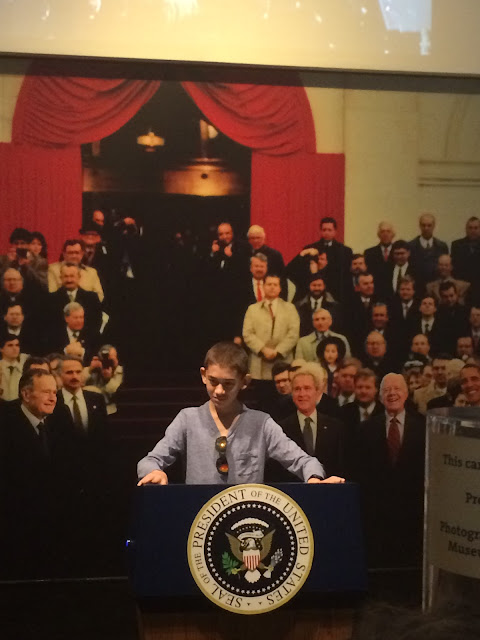
I probably should have opened with this: While we were away, Owen was sworn in as President of the United States of America. Hail to the Chief! 

Posing with Broadway sensation Alexander Hamilton 


Meeting of the minds 

Sam's class at the United States Mint, where we saw pennies and nickels being made. 

Jason's class at Christ Church Cemetery, final resting place of Benjamin Franklin 

Jason's class at Elfreth's Alley, the nation's oldest residential street

Sam's class at the mini-golf version of Elfreth's Alley 

Independence Hall, meeting place of the Continental Congress 

The Liberty Bell. Because you can't travel to Philadelphia and not see the Liberty Bell. This place was packed with people, all clamoring for photos. I thought I was so smart, because everyone was trying to photograph themselves in front of it. "No one is taking photos from the other side of it. Why not just go there?" Then I remembered the crack. Everyone wants a photo of the crack. 

(Of course, when you stand in front of it, you can't see the crack anyway.)


We did a lot of walking, particularly on Wednesday and Thursday. They found ways to keep it interesting. 

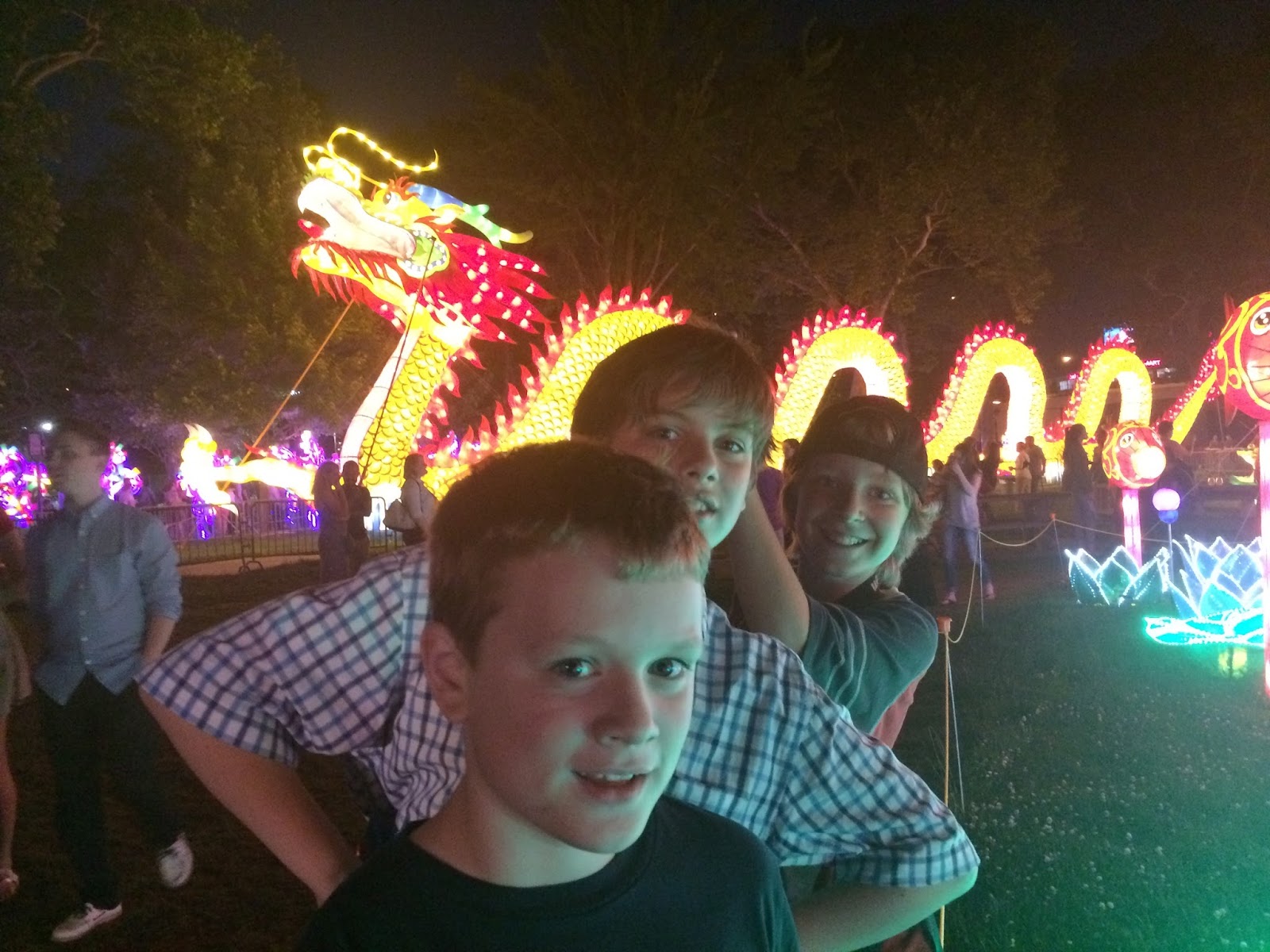
On Thursday evening, we visited the Philadelphia Chinese Lantern Festival. 

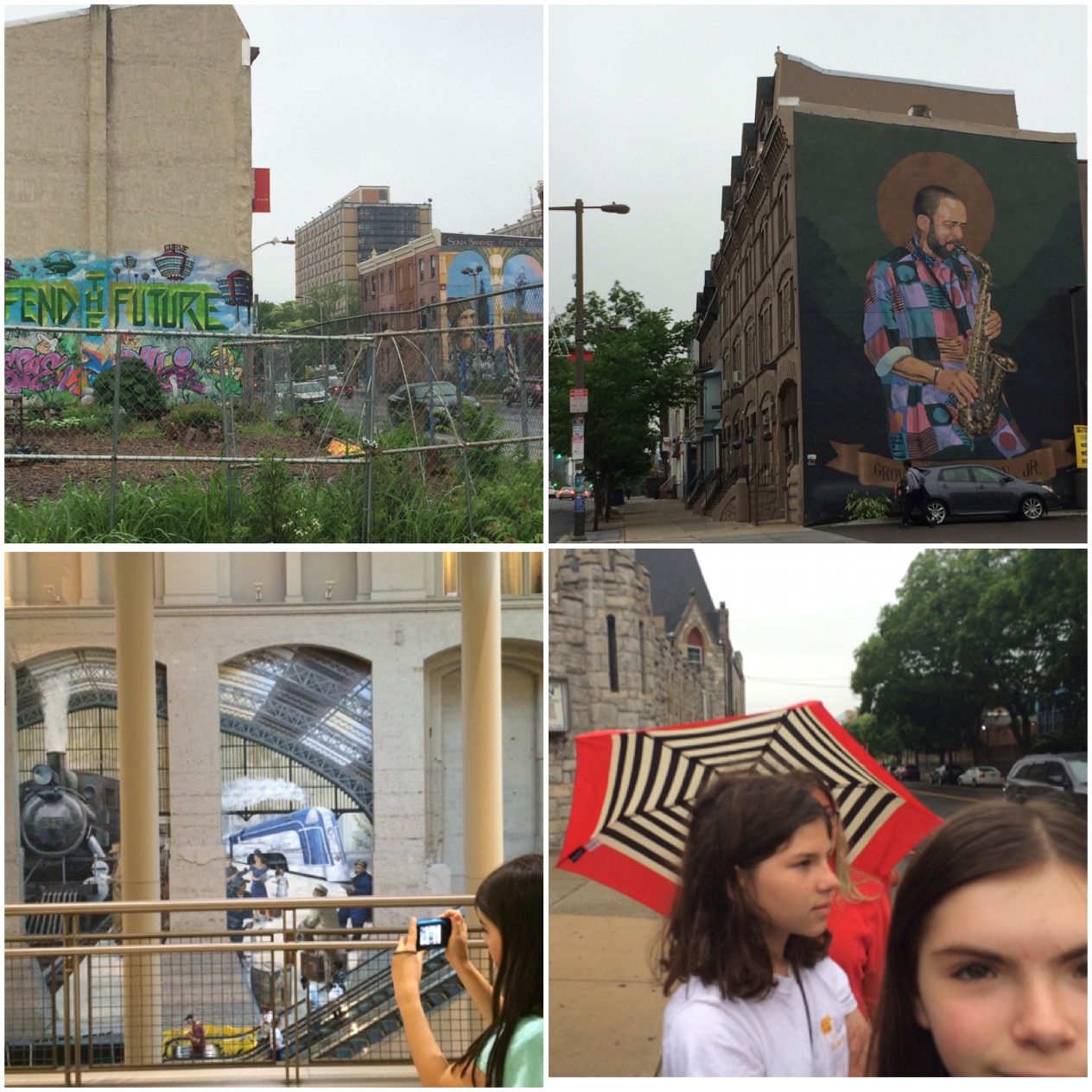
There are giant murals all over Philadelphia. 

I have no idea what this is about. 

No clue. 

Here we are at the Whistle Stop Restaurant in Centre Hall, Pennsylvania. 

Descending to the boats to tour Penn's Cave. 

On a boat, deep underground 

Sam's class, about to re-enter the cave following a scenic jaunt around a lake. 

In the interest of getting back to Summers-Knoll at a decent hour on Friday, we opted to dine on the buses. This potentially disastrous gamble paid off, with only a mildly disgusting amount of food left on the bus for us to deal with on Monday morning. 


It was a great trip! A hearty THANK YOU to everyone who helped make it happen! To the chaperones, faculty, staff, students, parents, and a significant percentage of the population of Philadelphia, you have our humble gratitude. 


Okay, WHERE TO NEXT YEAR??? 


Friday, May 27, 2016

Jason's Class: The Trailer

It is astonishingly difficult to get ten different kids to 1.) smile, 2.) keep their eyes open, and 3.) look at a camera at the same time.  

In this blog post, enjoy the many attempts that I made, along with a smattering of various happenings from the last few weeks. 


Here's a video that you may have seen over email. Ella has called it "the trailer for our class." 


We've had a few birthdays lately. It's a class tradition to allow the birthday person to choose a class activity in celebration. On Ella's birthday, she opted for "class karaoke." Watch the video below at your peril. 


There has been a lot of wetland exploration at recess.


Shan was unexpectedly out sick for PE one day, so we picked a park, got on a bus, and headed over to check it out. 


In Math, kids are doubling down on their book work, setting personal goals for the end of the year. Some classes are spent working toward those goals, others are spent playing math games. Here are a couple of moments from a class game of Farkle, which is a favorite. 


There have been a number of presentations lately. We've been learning about the American Revolution, and Nick prepared a lecture on the military tactics of that time. 


Later, Miel and Bora presented on guinea pigs, complete with a guest appearance by Miel's pets. 


Oliver the human meets Oliver the guinea pig. 


Our milkweed & monarch project continues to require a significant amount of work. The good news is that our beds are almost prepared. 
This was on Juna's birthday. This probably wasn't how she planned on spending it. 

Rest for the weary. 

Our impact study. We delicately examine logs, looking to see what might be living in the area where we were digging. 

Here's what we found! These are the mystery eggs discovered beneath a log (pillbug provided for scale). Any ideas on what they are? 

This is the site where we harvested soil for our beds. What is the impact of our actions? What did this site look like before, and what will it look like after we've gone? Now that we've seen the small impact that we made, we were led to wonder where soil purchased from stores comes from? 
When we return from our spring trip, we'll be forging ahead to get things planted and established before the end of school. 


Friday, May 13, 2016

Monarchs & monarchs


The last several weeks have been informed by learning about two types of monarch, both of which have been cast aside by Americans. One was intentional (King George III, during the American Revolution), the other has been an unintended consequence of the rise of industrialized farming in the United States (the migrating monarch butterfly). 
You may recall some of our work earlier in the year inspired by Last Chance to See, a powerful and entertaining book by Douglas Adams. In it, Adams and naturalist Mark Carwardine travel the world in search of some of the most endangered animals on the planet. 

It is a sad truth that there are endangered species in every region of the world, including our own. Rather than view this as an immutable fact beyond our control, our class has opted to actively work to reverse the fortunes of a familiar, but threatened species: the migratory monarch butterfly. 


The monarch is striking and iconic. If asked to picture a butterfly, most people will likely conjure a monarch in their mind. It is a widespread species, but the insects that we see in Michigan are part of a remarkable annual migration that becomes more miraculous and mysterious the more you learn about it. 

There is (of course) a Wikipedia article about this migration, but in brief: Monarch butterflies take part in a migration that begins in the mountains of Mexico, passes through the continental United States, and concludes in Canada, where they reverse course and head back South. The remarkable thing about this is that the annual migration takes five generations of monarchs to complete. The butterflies that start out in Mexico are not the ones that arrive in our state months later, but their grandchildren. How these butterflies know to consistently follow these paths of their ancestors is a mystery to science.  


It's also a phenomenon that is in danger of disappearing. 


Monarchs are wholly dependent on milkweed, on which they lay their eggs during this long journey. Familiar caterpillars soon hatch, feast on the leaves, create a chrysalis, and emerge in their adult stage two weeks later. 

Milkweed, formerly quite plentiful, is being wiped out en masse as an unintended side effect of the proliferation of industrial farming. Pesticides meant to protect crops have eradicated milkweed populations, significantly fragmenting and reducing a vital resource for the monarchs. 


Happily, there are simple things that people can do to help. 


The most passive is to learn what milkweed looks like, and take care not to remove or poison it if you happen to have it on your property. Milkweed has a bit of a public relations problem. It has the word "weed" right in its name, and it tends to grow in unpredictable places from year to year, confounding gardeners of a more controlling nature. One of the many things we hope to do is to work to rehabilitate the reputation of this important plant. 

A screenshot of recently spotted monarchs.
Visit this link for an interactive version. 

Our class has opted to take a more proactive approach. We have spent the last several weeks researching and planning a monarch waystation, which we're developing on the campus of Summers-Knoll. It is taking shape just outside of the windows of the 5/6 classrooms. As of today, there are two raised beds (constructed by Chris Swinko and his 3/4 class) that will eventually be stocked with native flowering plants that will bloom throughout the spring and summer, and milkweed that has been cultivated from local sources. 


It has been quite a project. This is an interdisciplinary affair, born in Science class, but taking significant portions of our homeroom time. Science Teacher Lisa has a certified monarch waystation at her home, and she has served as an inspiration, mentor, and guide in this endeavor. 

Our grand plan goes beyond simply creating a waystation at school. We also hope to cultivate and distribute milkweed to all who are willing to grow it at their homes. This means that we've been trying to grow our own milkweed from seed. Teams of students have been attempting to cultivate seeds in our classroom and in the greenhouse, experimenting in order to determine the most effective ways to grow milkweed from seed. 


We've also been tracking existing monarchs. Studying monarchs is an excellent way to engage as citizen scientists, with enthusiastic hobbyists and naturalists collecting and sharing data about milkweed and monarch sightings. Kids can be found checking this site daily. (Ask your child about it!) 

The project has offered many authentic opportunities for genuine science. For example, rather than simply buying topsoil from a retailer, we are trying to "mine" our own campus for material. One day found all of our students working in teams to collect soil samples from various places on the Summers-Knoll grounds to determine the best site to take soil. 

When it was determined that the most fertile soil seemed to be in our woods just beyond the playground, we decided that we needed to do a mini-environmental impact study. What would it mean for us to move into a previously undisturbed area to remove several dozen cubic feet of soil? To find out, we trekked carefully into the woods to see what was living back there. 


What we found surprised us all. 


We are currently attempting to identify the source of a clutch of eggs found beneath a log near our vernal pool. Our initial suspicion is that our small woods may be home to a population of reclusive salamanders. We are trying to verify this through online research and reaching out to herpetologists. Stay tuned for updates! 


I also mentioned that other monarch earlier in this post. As part of our background preparation for our upcoming Spring trip to Philadelphia, we have been studying colonial America and the American Revolution. We've been using a number of sources in order to get a well-rounded look at this period of history. We have read selections from Joy Hakim's A History of US series, watched selections from the HBO series John Adams, and listened to selections from the recent Broadway phenomenon Hamilton. We've also done a close reading and discussion of the United States Declaration of Independence, and we've been barreling through our current read aloud book, Chains by Laurie Halse Anderson. 


Taking stock of the greenhouse inventory


Researching milkweed, native plants, and monarchs


Attempting to grow milkweed from seed, attempt #1


Moving the raised beds to their new homes


Searching for ideal sources of soil


Soil samples settling for close observation and study